


KATHRINA RUPIT
Mexican–Irish artist creating public artworks, material-led installations and cultural exchanges that connect mythology, ecology and collective memory.


Public art
Is the most visible expression of my practice.
I create murals that respond to the histories, communities and character of a place. My public art practice is rooted in dialogue, transforming shared spaces into points of connection and belonging.
Open to commissions locally and internationally.
Projects of all scales are welcome.

Every project begins with a relationship.
A relationship between a community and its landscape.
Between mythology and contemporary life.
Between traditional knowledge and scientific curiosity.
Between architecture and ecology.
Between one culture and another.
Working across public art, material research and participatory practice, I explore how these relationships shape the places we inhabit and how art can help restore them when they have been forgotten, fragmented or overlooked.
IK MULUK
An evolving artwork exploring how artists can build with, rather than simply draw from, the living world.
Co-founded by Kathrina Rupit and Joey Baker,
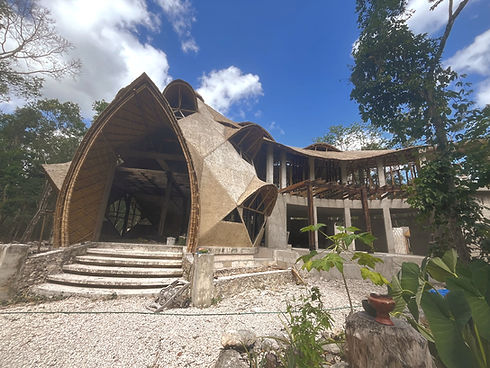
IK-MULUK is an artist-led research centre in the Mexican rainforest where public art, regenerative architecture and material experimentation converge.
Developed through bio-based construction, ecological research and international collaboration, the project investigates how artistic practice might contribute to more reciprocal relationships between people, place and the ecosystems that sustain them.

My material research explores how natural pigments, earths and regenerative practices can reshape the way art is made.
Drawing from historical processes and contemporary experimentation, I explore how culture, colonial histories and inherited systems have shaped our relationship with materials and the living world.
In an age of accelerating production and consumption, this research offers an alternative rhythm of making one rooted in care, material intelligence and wonder.
Some of the most meaningful conversations begin before a wall is painted.
Working internationally, I develop projects with embassies, cultural institutions, artists and communities, using art as a space for dialogue across cultures.
My practice moves between cultural exchange and cultural diplomacy, creating collaborations that connect places, histories and communities while building new relationships across borders.


